
A global audit of 100 investors identifying 2026 asset liquidation priorities and conviction gaps.
67% of Investors Would Sell Tech/Crypto Before Gold (2026 Investor Fear Index)
Disclaimer: This website and its content are for informational purposes only and is not financial advice.
Executive Summary
The 2026 Investor Conviction Audit serves as a definitive analysis of global financial sentiment as we transition into a complex new fiscal cycle. Following a landmark year where Gold achieved a +63% annual return, this study was commissioned to measure the depth of investor resilience across multiple asset classes.
Our findings reveal a sharp "Liquidation Hierarchy" in the modern portfolio. As economic uncertainty rises, investors are increasingly viewing speculative and growth-oriented assets as "disposable" liquidity sources while treating physical precious metals as their final line of defense. Most notably, a combined 67% of all respondents indicated they would liquidate Technology Stocks or Cryptocurrency before parting with their physical Gold holdings. This report deep-dives into the literacy gaps, regional anxieties, and psychological paradoxes that will drive capital flows throughout 2026.
I. Stringent Methodology & Data Integrity
To maintain the highest industry standards, the data in this report was collected through a multi-channel outreach program designed to capture a diverse yet specialized respondent pool.
Participant Sourcing & Demographics
The audit consisted of 100 participants sourced primarily through professional research platforms including SurveySwap and SurveyCircle, supplemented by direct outreach and verified website visitors. All participants were required to be over 18 years old and active investors/retirement account holders. The study included all genders to provide a balanced global perspective, and each participant took the audit exactly once.
The Technical Literacy Filter (The Trap Question)
Beyond demographics, we implemented a "Technical Trap Question" to separate general sentiment from informed market conviction. Respondents were asked to define the relationship between Gold and the U.S. Dollar.
The Filter: Only 32% of respondents correctly identified the inverse correlation.
The Result: This allowed us to isolate a High-Literacy Cohort of 94 respondents who passed our technical filters, providing a "Smart Money" benchmark against the general group.
Updated Jan 1st, 2026
Share this:
II. The Liquidation Hierarchy: Gold as the Anchor
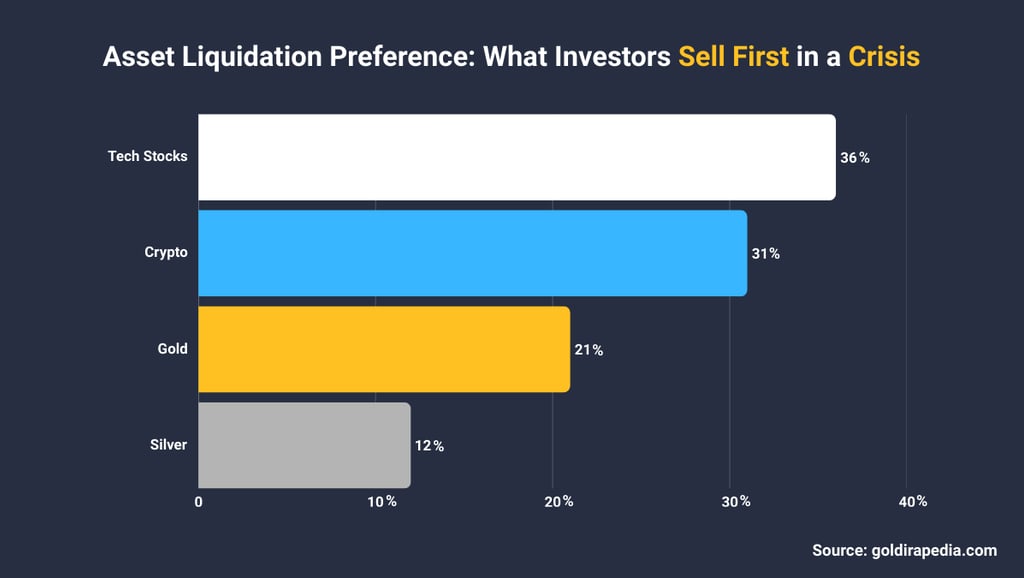
One of the most telling metrics of the 2026 audit is the "Order of Sale." We asked investors which asset they would liquidate first if they were forced to raise cash immediately. The results suggest that while investors enjoy the upside of "paper" assets, they do not trust them to hold value during a crisis.
Tech Stocks / Equities: 36%
(The first asset to be sold)
Cryptocurrency: 31%
Physical Gold: 21%
Physical Silver: 12%
When combined, 67% of the market would sacrifice their Tech and Crypto positions before touching their Gold. This highlights a fundamental psychological shift: in 2026, Gold is no longer just an investment; it is the "Final Reserve" of the private portfolio.
Subscribe to Newsletter
Get updates on new Gold IRA posts, market news, and more.
By Jordan McCaleb, Precious Metals Investment Researcher


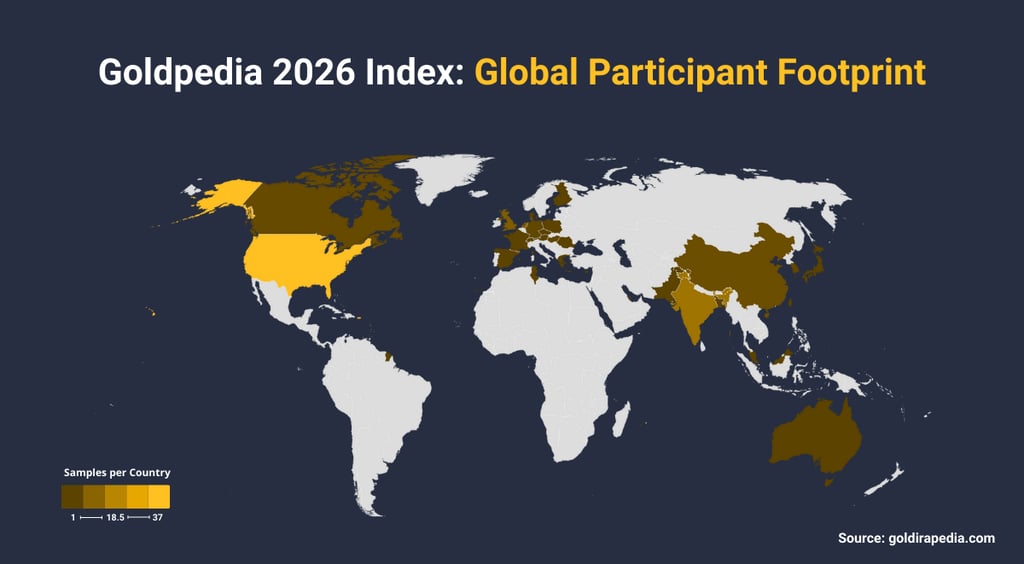
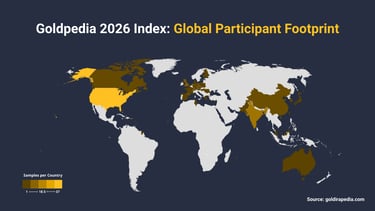
A surgical map visualizing the 29-country distribution, led by the US (37%), India (14%), and the UK (8%).
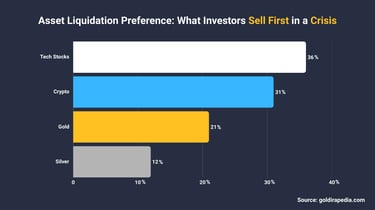
A clear breakdown showing that precious metals are the last assets investors are willing to sell.
III. The Conviction Gap: Knowledge vs. Sentiment
A primary goal of this audit was to determine if financial literacy leads to higher investment conviction. By comparing our High-Literacy Cohort (N=94) against the general average, we found a distinct "Conviction Gap."
Question: Do you believe Gold will hit a new all-time high before the end of 2026?
General Average (N=100): 38% Yes
High-Literacy Cohort (N=94): 40.63% Yes
The Analysis: The data shows a 7% boost in conviction among those who understand market fundamentals. This suggests that the current skepticism in the market (where 62% are unsure or bearish) is largely driven by a lack of technical understanding regarding currency debasement and debt cycles.
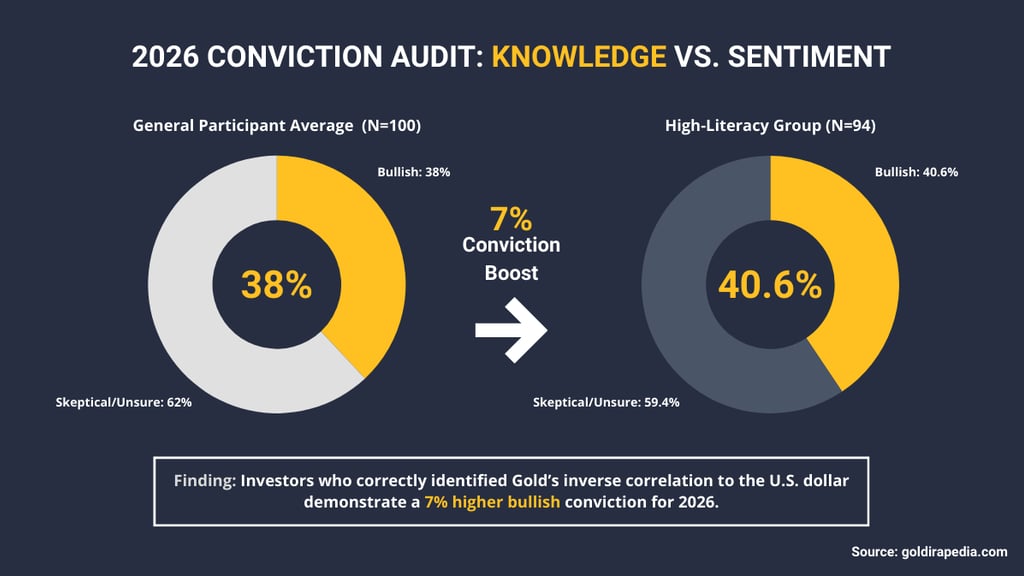
Contrasting how technical literacy directly correlates to increased market confidence.
IV. The "Dollar Blindspot": Global vs. Domestic Anxiety
The audit uncovered a massive 52% Awareness Gap regarding the health of the U.S. Dollar. This finding is particularly critical for journalists covering global macro trends.
US Respondents citing US National Debt as a top threat: 13.51%
International Respondents (Global) citing US Debt as a top threat: 20.63%
The Analysis: International investors—spanning from Switzerland to Singapore—are significantly more attuned to the risks of U.S. National Debt than American investors are. This "Dollar Blindspot" indicates that while the U.S. domestic market remains focused on local equity growth, the rest of the world is actively seeking protection against a potential U.S. currency crisis.
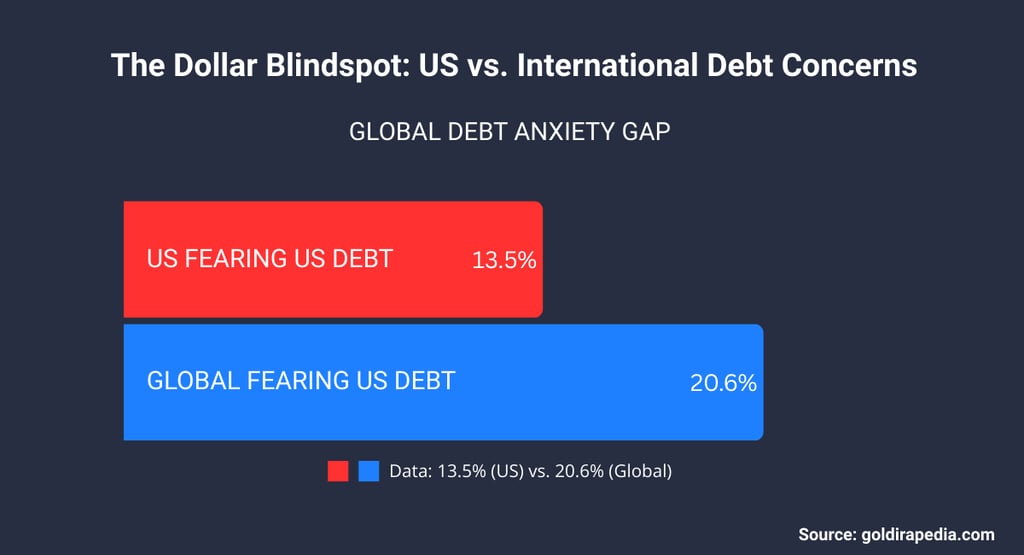
Visualizing the divergence between American and International concern for the National Debt.
V. The FOMO Paradox: Fear vs. Action
When asked to identify the single greatest threat to their retirement savings in 2026, respondents focused heavily on systemic collapse.
Stock Market Collapse / Recession: 39%
Persistent US Inflation: 26%
US National Debt / Currency Risk: 18%
Geopolitical Conflict: 17%
There is a striking paradox in the data: while 39% fear a market collapse, nearly half of all respondents (46%) still plan to increase their exposure to traditional equities in 2026. This "FOMO Paradox" suggests a market that is "trapped" in traditional models, fearing a crash but unwilling to miss a potential rally. Meanwhile, a decisive 22% of "Smart Money" is breaking away from the crowd to increase physical holdings.
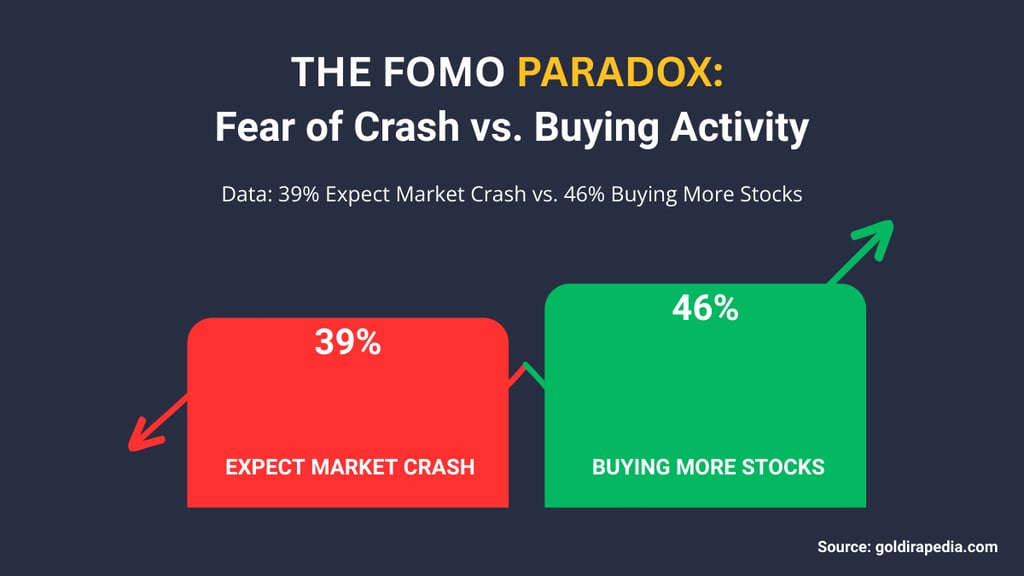
Comparing the 39% who fear a recession with the 46% who are still increasing stock exposure.
VI. Global Distribution: A 29-Country Consensus
The audit captures a truly global perspective, with respondents contributing from 29 sovereign nations. The geographic weight of the study is distributed as follows:
Primary Nodes: United States (37%), India (14%), United Kingdom (8%), Netherlands (8%).
Strategic Nodes: China (4%), Canada (3%), Germany (2%), South Korea (2%), and Switzerland (1%).
Supporting Regions: A diverse mix of 20 additional countries including Singapore, Japan, France, Australia, and Qatar.
This wide-reaching footprint ensures that our data reflects a global consensus rather than a regional bias, making it a vital resource for international analysts and journalists.
VII. Conclusion: The 2026 Strategic Outlook
As we move into 2026, the Investor Conviction Audit makes one thing clear: the market is decoupling. Speculative assets like Tech and Crypto, while popular for growth, lack the deep-seated conviction that now supports physical precious metals.
The 52% awareness gap regarding U.S. debt and the 67% liquidation priority for non-gold assets signal a flight to quality that is only beginning. For the 2026 investor, the move is no longer about chasing the highest return, but about securing the "Last Man Standing" in an increasingly volatile global economy. The data suggests that for those who understand the fundamental risks, the conviction has never been higher.
Appendix: Methodology Footnotes
Data Integrity: All participant data was anonymized and secured using secure encryption. Redundant entries based on unique survey identifiers were removed during the cleaning phase.
Source Channels: 91% of respondents were sourced via SurveySwap and SurveyCircle, subjected to rigorous pre-qualifying requirements—mandating they be active investors, retirement holders, and 18+ years of age; 5% via Direct Outreach to verified retirement account holders; 4% via Goldpedia Organic Traffic.
Sample Validation: The N=94 "High-Literacy Cohort" was determined by a binary pass/fail on the technical inverse-correlation trap question. Participants failing this filter remained in the N=100 "General Sentiment" pool but were excluded from technical conviction modeling.
Geographic Weighting: While 29 countries were represented, data was weighted to ensure no single international region (outside the US) disproportionately skewed the "Global Awareness Gap" findings.
Conflict of Interest: This audit was independently funded by Goldpedia. No outside financial institutions influenced the technical trap questions or the liquidation hierarchy rankings.
© 2026 Goldpedia All Rights Reserved
Subscribe to Goldpedia